
What Khao Phra Thaeo is, and why it is not a national park
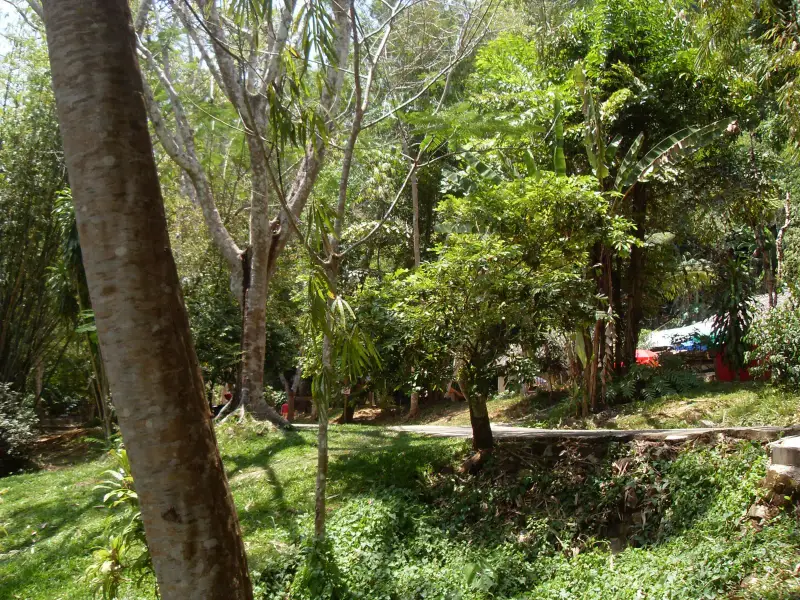
Khao Phra Thaeo (also written Khao Phra Taew or Khao Pra Thaew) covers a ridge in the north of Phuket, in Thalang district, across the sub-districts of Thep Krasattri, Si Sunthon and Pa Khlok. It is not a national park but a non-hunting area for wildlife. The Ministry of Agriculture and Cooperatives declared it on 12 May 1980, and the text appeared in the Royal Gazette on 8 July 1980 (document in the DNP catalogue).
DNP gives the area as 13,925 rai (22.28 km²) and says its Nature and Wildlife Study Centre has been here since 1977. It is humid tropical forest. For a visitor the difference from a national park comes down to one thing: DNP’s national park fee table (revision of 2 June 2023) does not list this area, so we do not take the fee from it (see the fee section below).
What is inside
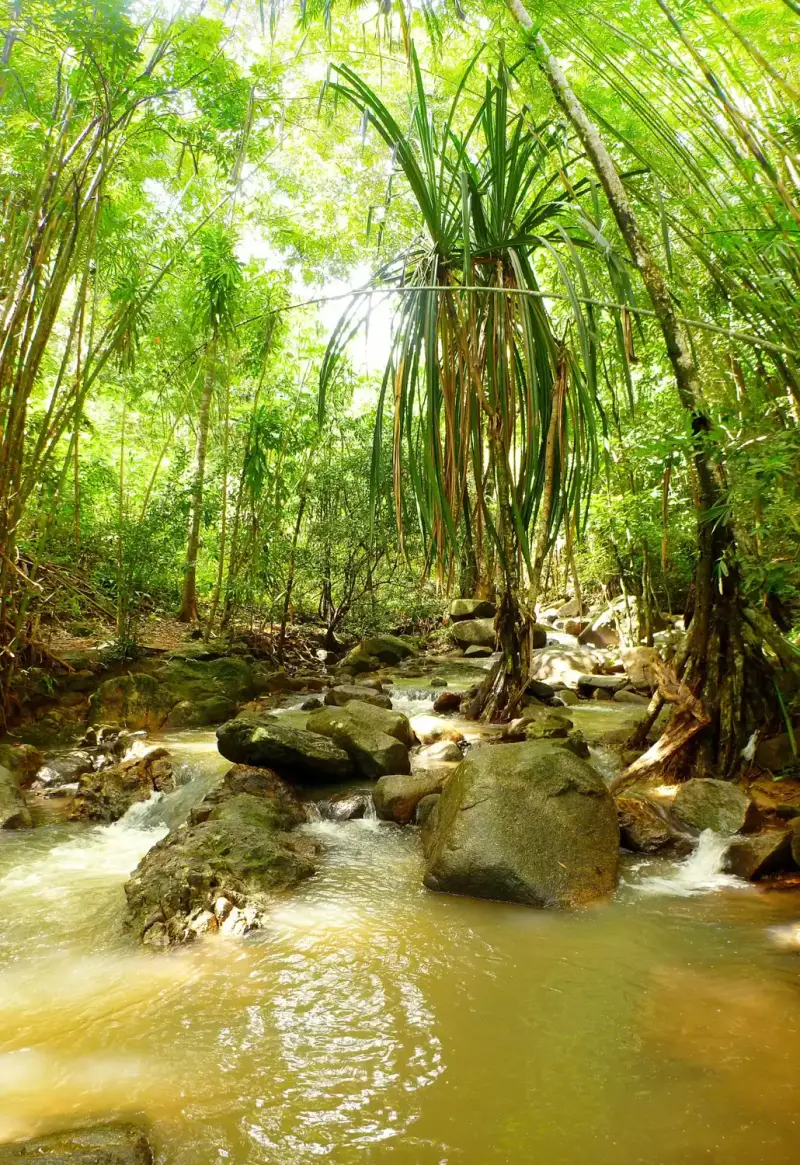
Ton Sai Waterfall. A small waterfall on the Thalang side, covered on its own page: Ton Sai Waterfall. The Phuket provincial website calls it suitable for a family picnic: large trees give shade all year, and there is plenty of water in the rainy season.
Bang Pae Waterfall. Also small, among big shady trees. The provincial website says locals swim in its pools and play in the streams, and the Gibbon Centre stands here. The Centre writes that water gathers in the Wang Sai basin, where its permanent research station is, and then drops over rocks to form the Bang Pae, Ton Sai and Para waterfalls.
Gibbon Rehabilitation Project (GRP). It has worked since 1992 under the Wild Animal Rescue Foundation of Thailand. By its own account, no wild gibbons were left alive in Phuket in the early 1990s because they were taken for tourists who wanted to play with them and pose for photos. For the first ten years releases onto islands around Phuket failed. The project then moved gibbons back into Phuket’s remaining rainforest, and the families began to breed on their own. Today it is a set of booked learning sessions, not a zoo.
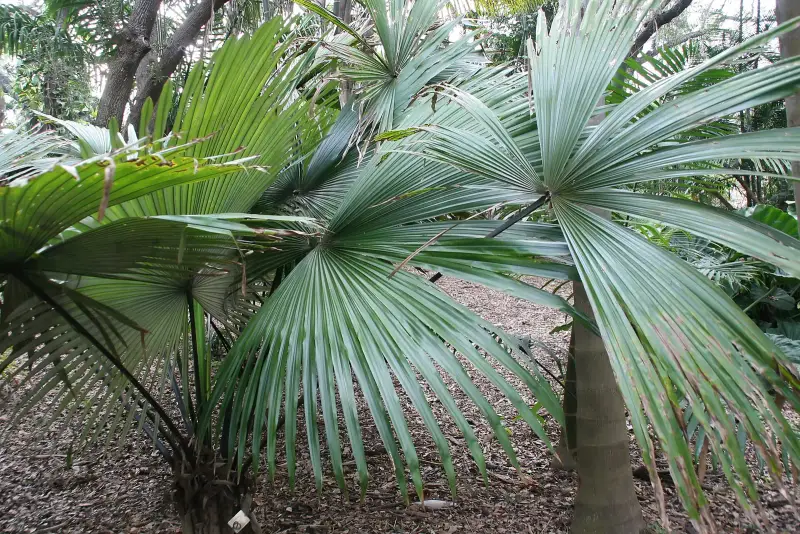
Forest and animals. DNP describes forest rich in rattan and ferns, with monkeys, gibbons, civets, squirrels, mouse-deer, wild boar and more than 100 bird species. On the Centre’s nature trail DNP notes the white-backed palm (Kerriodoxa elegans), which, it says, has been found in only one place in the world. The Gibbon Centre adds that more than 400 plant species grow here.
Opening hours and how to spend your time
We found no official opening hours for the area, and DNP’s page does not give any. TAT Newsroom wrote “daily 8:00-17:00” in 2014, but that is an old source and not DNP’s, so the hours are not confirmed as of 18 Oct 2026. The DNP centre’s phone is 0 7631 1998. The Gibbon Centre keeps its own schedule (see below).
| Option | Time to allow | Best for | Downside |
|---|---|---|---|
| Ton Sai, a short walk | about 1.5-2 hours including the drive from Old Town (Thaipedia estimate) | Families, visitors without a booking | The waterfall is weak in the dry season |
| Bang Pae and the Gibbon Centre | a 1-hour session plus the waterfall and the drive, 3-4 hours in all | Anyone curious about gibbons who also wants a swim | Booking only, and the session is paid |
| Both sides in a day | half a day, 19.5 km and about 26 minutes between the entrances | Visitors with a car or a driver for the day | Two entrances; whether one ticket covers both is not confirmed |
| Trail between Bang Pae and Ton Sai | not confirmed: 4 km per MGR Online, 8 km per TAT | Fit, prepared walkers | TAT calls the route tough and humid |
When to go: waterfall season
DNP describes two seasons here: a rainy season from April to November (about 180 days with rain, 2,350-2,700 mm a year) and a dry season from December to March. In heavy rain the streams run fast and feed the Ton Sai and Bang Pae waterfalls. The Phuket provincial website says there is plenty of water in the rainy season, which means less in the dry season.
| Period | What to expect |
|---|---|
| December-March | 24-82 mm a month, dry trails, weak waterfalls |
| April | 135 mm, hot, still little water |
| May-October | 237-350 mm, full waterfalls, the Centre may close access on the rangers’ decision |
| November | 178 mm and 15.9 rain days, rains getting rarer |
More in Phuket weather by month.
Getting there and how long it takes
We could not confirm public transport to the entrances: the provincial website mentions local buses to Bang Rong Pier but publishes no timetable. In practice people go by taxi, Grab or their own transport; see our guide to taxis in Phuket.
| From | To Ton Sai | Time without traffic |
|---|---|---|
| Airport HKT | 16.1 km | about 20 min |
| Phuket Old Town | 22.2 km | about 26 min |
| Patong | 25.6 km | about 31 min |
| Kata | 37.0 km | about 42 min |
OSRM calculation on OpenStreetMap data, route from Old Town. To the Gibbon Centre at Bang Pae it is also 22.2 km and about 26 minutes from Old Town, and 37.0 km and about 43 minutes from Kata. Between the Ton Sai and Bang Pae entrances it is 19.5 km and about 26 minutes by road.
Fees and tickets
- Gate fee. According to the Gibbon Centre, THB 200 per adult (15+) and THB 100 per child aged 3-14, cash only, rates updated on 23 May 2025. It is the area’s fee and is separate from the Centre’s own ticket. We found no DNP page with this rate, so check at the gate
- DNP national park table. Revision of 2 June 2023; Khao Phra Thaeo is not in it because it is not a national park
- Ton Sai side. The fee at this gate is not separately confirmed, so keep cash on you
- Gibbon Centre session. Per the Centre on 18 Oct 2026: adult THB 1,100 when booked in advance (THB 1,200 without a booking), child 5-14 THB 650, ages 0-4 free, a private session for up to 12 people THB 10,000
The Gibbon Centre: how to get in
The Centre takes visitors only on learning sessions by booking, and on days without bookings nobody is on site and everything is closed. One-hour sessions run 10:30-11:30, 12:30-13:30 and 14:00-15:00, and a 2.5-hour morning session runs 9:30-12:00 (sold through Airbnb Experiences). It admits no more than 36 visitors a day, a limit meant to reduce contact with the gibbons. Book at gibbonproject.org, or write to grp@gibbonproject.org or message WhatsApp +66 88 590 9714. There are sessions in Russian: the next one on the booking page is Sunday 25 October 2026, 11:00-12:00.
The Centre’s own rules:
- Do not buy gibbons or products made from them
- Do not pose for photos with baby gibbons: taking a baby usually means killing the adults
- If you see illegal wildlife trade, report it to DNP on 1362 or to the police natural resources unit on 1136
What to do in the rain
In the rainy season the Centre warns that sometimes it is unclear until the morning whether a ranger will close the park for visitors’ safety, so leave your WhatsApp number with the Centre (note dated 20 May 2026). Streams in the forest run fast in heavy rain, so do not count on swimming at Bang Pae then. On a grey day without downpours a booked session remains the surest part of the plan; for other rainy-day ideas see our guide to Phuket in the low season.
Safety
- Trail. TAT calls the forest humid and the trek tough, and recommends insect repellent, water and sturdy footwear
- Water. Locals swim in the Bang Pae pools (provincial website), but the sources give no lifeguard or depth information: enter the water carefully and not after heavy rain
- Wild animals. Monkeys live in the forest (DNP). Do not feed them or show food. After a bite or scratch, wash the wound with soap and water for at least 15 minutes and see a doctor (WHO)
- Baby gibbons. Posing for photos with them supports the trade, as the Centre itself says
Children
The gate fee for ages 3-14 is THB 100; the Centre does not state a rate for under-3s. The Centre’s session is at the child rate for ages 5-14 and free under 5. Ton Sai is the easier choice for small children: a short walk with shade. More places for families are in our guide to Phuket with kids.
What to bring
- Cash for the gate fee: the gate takes only cash, and the Gibbon Centre also takes cards (per the Centre)
- Insect repellent and water
- Closed shoes with grip
- A change of clothes and a towel if you want to swim
- A rain jacket in the rainy season
Who it suits and who it does not
- Suits: anyone tired of beaches who wants half a day in the forest, families with children from age 3 (Ton Sai), and anyone interested in how gibbons returned to Phuket
- Does not suit: anyone expecting big waterfalls, dry-season visitors who want water, and anyone who wants contact with animals: the Centre deliberately limits it
FAQ
How much is the entrance fee for foreigners at Khao Phra Thaeo?
The Gibbon Rehabilitation Project says that on 18 Oct 2026 the gate charges THB 200 per adult and THB 100 per child aged 3-14, cash only, with rates updated on 23 May 2025. We found no official DNP document for this rate. The DNP national park fee table (revision of 2 June 2023) does not list this area because it is a non-hunting area, not a national park. Confirm at the gate.
Is Khao Phra Thaeo a national park?
No. A Ministry of Agriculture and Cooperatives announcement of 12 May 1980, published in the Royal Gazette on 8 July 1980, made it a non-hunting area. Maps and tour sellers often call it a national park, so do not carry over national park fees to it.
How do I visit the Gibbon Rehabilitation Centre in Phuket?
Only by booking: the Centre takes visitors on learning sessions, and on days without bookings nobody is on site and the project is closed. One-hour sessions run at 10:30, 12:30 and 14:00, and a 2.5-hour morning session runs 9:30-12:00, with a cap of 36 visitors a day. Book at gibbonproject.org (grp@gibbonproject.org, WhatsApp +66 88 590 9714), details checked 18 Oct 2026.
When are the waterfalls actually flowing?
In the rainy season. The Phuket provincial website says Ton Sai has plenty of water in the rainy season, and the Thep Krasattri municipality says the flow is strongest in the rains. TMD normals give 24-82 mm a month from December to March against 237-350 mm from May to October, so the waterfalls are weak in the dry season.
Can I take children to Khao Phra Thaeo?
Yes. The provincial website calls Ton Sai suitable for a family picnic, and the Gibbon Centre quotes a child gate fee for ages 3-14. The Centre charges the child rate for ages 5-14 and lets under-5s in free. TAT calls the long trail between Bang Pae and Ton Sai tough and humid, so keep to short walks with small children.
How do I get to Khao Phra Thaeo without a tour?
By taxi, Grab or your own transport: Ton Sai is 16.1 km (about 20 minutes) from the airport, 22.2 km (26 minutes) from Old Town and 37 km (about 42 minutes) from Kata, by OSRM. We found no public transport timetable to the entrances. Taxi rules are covered in our Phuket taxi guide.
How long is the trail between Bang Pae and Ton Sai?
We found no official length. MGR Online wrote in 2017 of 4 km between the two waterfalls, while TAT Newsroom in 2014 called the most popular trail from Bang Pae to Ton Sai 8 km long. Ask the rangers or call the DNP centre on 0 7631 1998 before you set out, and do not rely on maps alone.
Sources
- DNP. Khao Phra Thaeo Nature and Wildlife Study Centre: area, climate, fauna and flora
- Royal Gazette vol. 97 part 104: Ministry of Agriculture announcement declaring the Khao Phra Thaeo non-hunting area (12 May 1980), DNP catalogue
- Phuket Provincial Administration. Khao Pra Thaeo Wildlife Conservation Development and Extension Center
- Phuket Provincial Administration. Ton Sai Waterfall
- Phuket Provincial Administration. Bang Pae Waterfall
- Gibbon Rehabilitation Project. Visit us in Phuket: sessions, daily cap, contacts
- Gibbon Rehabilitation Project. 1-Hour Learning about Gibbon Rehabilitation: rates and gate fee
- Gibbon Rehabilitation Project. Phuket Release Site and Our Story
- Gibbon Rehabilitation Project. Be a responsible visitor
- DNP. National park entrance fees for individuals (CSV, revision of 2 June 2023)
- TAT Newsroom. Beyond Phuket's beaches, welcome to the jungle (24 Dec 2014)
- MGR Online. Bang Pae to Ton Sai trail and the Khao Phra Thaeo non-hunting area (14 Sep 2017, in Thai)
- TMD. Climatological Data of Thailand for 30 Year Period (1991-2020), Phuket station
- WHO. Rabies: fact sheet (first aid after a bite)
- OpenStreetMap, OSRM routes to Ton Sai Waterfall and the Gibbon Centre
Found an error or outdated fact? Tell the editors, we will fix it and update the check date.